
You sit down at your desk, open a document you have reviewed dozens of times, and suddenly draw a complete blank on a client’s name. Or perhaps you walk into another room only to forget what you needed. While minor lapses happen to everyone, noticeable mental fatigue, sluggish processing speed, and persistent brain fog often point to something deeper than simple distraction.
At the cellular level, your brain is an energy engine. It makes up barely 2% of your total body weight yet consumes roughly 20% of your daily glucose and oxygen. When the biochemical fuel powering those billions of neural connections starts to run low, mental sharpness inevitably dips. This connection between cellular fuel and mental clarity has driven intense scientific interest in NMN cognitive function as a viable target for age-related cognitive support.
Quick Answer: How Does NMN Support Cognitive Function?
Nicotinamide mononucleotide (NMN) supports brain health by converting directly into nicotinamide adenine dinucleotide (NAD+), a vital coenzyme that declines with age. Elevated NAD+ levels reactivate neuronal mitochondria, enhance cerebral blood flow through neurovascular coupling, and stimulate SIRT1 longevity enzymes. Preclinical and emerging clinical studies show that NMN helps protect neurons against oxidative stress, improves spatial memory retention, and restores everyday mental energy without overstimulating the central nervous system.
The Brain’s Hidden Energy Crisis: Why NAD+ Matters for Mental Acuity
Every thought, memory, and sensory perception relies on an uninterrupted stream of adenosine triphosphate (ATP), the primary energy currency of your cells. To produce ATP, your brain cells rely on a coenzyme known as nicotinamide adenine dinucleotide (NAD+). Without sufficient NAD+, cellular energy generation slows down, cellular waste builds up, and neurons lose their ability to communicate efficiently.
Here lies the challenge: human NAD+ levels drop precipitously over time. By age 40 to 50, your body’s NAD+ reserves can be up to 50% lower than they were during early adulthood. For the brain, this decline triggers a quiet metabolic shortfall. Neurons cannot store surplus energy; they must synthesize ATP on demand. When mitochondrial efficiency slips due to depleted NAD+, subtle symptoms begin to surface:
-
Mid-afternoon mental exhaustion that caffeine fails to resolve.
-
Reduced working memory capacity, making multitasking feel overwhelming.
-
Slower word-retrieval times during casual and professional conversations.
-
Extended recovery periods following intense cognitive tasks or broken sleep.
Replenishing this missing fuel is not as straightforward as swallowing raw NAD+. Because intact NAD+ is a large, fragile molecule that breaks down during digestion, cellular biologists turn to its direct precursor: nicotinamide mononucleotide (NMN). By rapidly entering cells and converting into active NAD+, NMN offers a reliable way to recharge the metabolic engines inside your central nervous system.
How NMN Supports NAD+ Brain Health: 4 Biological Pathways
The relationship between NMN and mental clarity is not about giving your central nervous system a caffeine-style jolt. Instead, it works across four foundational physiological pathways to reinforce long-term brain resilience.
1. Restoring Neurovascular Coupling and Blood Flow
Your brain demands dynamic blood circulation. When a specific region of the brain activates—such as the hippocampus during memory recall—nearby blood vessels must instantly dilate to deliver oxygen and glucose. This process is called neurovascular coupling (NVC).
As blood vessels age, endothelial cells lining cerebral capillaries become stiff and dysfunctional. Landmark research published by the National Center for Biotechnology Information demonstrated that NMN supplementation rescued cerebromicrovascular endothelial function in aging models [cite: 1]. By restoring cellular NAD+, NMN enabled microvascular relaxation and boosted cerebral blood flow, which translated directly into improved spatial working memory and coordination [cite: 1].
2. Revitalizing Neuronal Mitochondria
Mitochondria are the miniature power generators located inside your neurons. Over time, chronic oxidative stress damages mitochondrial DNA, causing these powerhouses to fragment and leak free radicals.
Supplementing with NMN triggers mitochondrial biogenesis—the synthesis of brand-new, healthy mitochondria—while clearing out degraded components. With healthier mitochondria producing steady ATP, brain cells can maintain the precise electrical voltage gradients needed to send neurotransmitter signals back and forth.
3. Activating Sirtuins (SIRT1 and SIRT3)
Sirtuins are a family of seven specialized proteins responsible for cellular defense, DNA repair, and epigenetic stability. However, sirtuins are strictly NAD+-dependent; if NAD+ is missing, sirtuins remain dormant. Much of the foundational science behind this mechanism stems from Dr. David Sinclair's longevity research, exploring how sirtuin activation influences cellular longevity and neuronal survival.
When NMN elevates NAD+, SIRT1 springs into action. In neurological tissue, active SIRT1 helps suppress programmed neuronal death, shields fragile dendritic spines, and promotes the production of brain-derived neurotrophic factor (BDNF). BDNF acts like biological fertilizer for your brain, encouraging the growth of new synaptic connections required to learn complex skills.
4. Dampening Microglial Inflammation
Chronic low-grade inflammation in the central nervous system—often called neuroinflammation—is a primary driver of brain fog and accelerated cognitive decline. Microglia are your brain's resident immune cells. In youthful tissue, they clean up cellular debris efficiently. In an aging, NAD+-depleted environment, microglia become chronically overactivated, releasing inflammatory cytokines that injure healthy adjacent neurons.
A study in GeroScience observed that NMN administration induced a distinctive anti-inflammatory transcriptional profile within neurovascular units, turning down inflammatory signaling cascades and safeguarding tissue integrity [cite: 2].
What the Research Shows: NMN for Memory and Cognitive Performance
Preclinical trials evaluating NMN for memory have yielded striking results across multiple cognitive markers. In rodents subjected to behavioral tests like the Morris water maze, subjects receiving NMN located submerged escape platforms substantially faster than age-matched controls. They demonstrated sharp spatial memory retention and adapted much quicker to altered maze patterns.
Researchers have observed several concrete neurological improvements during these trials:
-
Synaptic Plasticity Preservation: NMN protected long-term potentiation (LTP) in the hippocampus, the exact electrophysiological mechanism behind forming new memories.
-
Protection Against Hypoglycemic and Ischemic Stress: When blood flow or glucose was temporarily restricted, NMN-treated subjects maintained higher neuronal survival rates than untreated groups.
-
Clearance of Cellular Waste: Enhanced NAD+ levels supported the natural autophagy pathways that prevent protein aggregation in sensitive brain regions.
While animal trials allow researchers to look directly at tissue architecture, human clinical investigations are catching up quickly. Early human pharmacokinetic and metabolic trials confirm that oral NMN safely doubles blood NAD+ levels within two to four weeks. Participants routinely report subtle, cumulative changes rather than an instant buzz: words come to mind more fluidly, focus remains steady during deep work, and the heavy mental fatigue typical of late afternoons begins to fade.
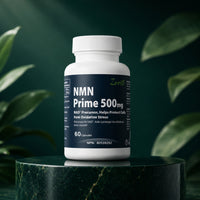
To ensure your brain benefits from real, biologically active compounds, selecting certified formulations like NMN supplements canada guarantees you receive third-party tested, Health Canada-licensed purity rather than degraded marketplace alternatives.

NMN vs. Other NAD+ Boosters: What Works Best for Brain Health?
With multiple longevity supplements on the market, choosing the most bioavailable compound can feel confusing. Here is how NMN compares to alternatives when targeting NAD+ brain health:
| Feature / Pathway | Oral NMN Capsules | Oral Pure NAD+ | Nicotinamide (NAM / B3) | Intravenous (IV) NAD+ |
| Blood-Brain Delivery | High via specialized transporters | Extremely Poor (gut breakdown) | Moderate (crosses barrier) | High systemic spike |
| Cellular Uptake | Rapid direct conversion | Digested into precursors | Converted via salvage pathway | Breaks down into intermediates |
| Sirtuin Activation | High (supplies required NAD+) | Ineffective orally | Low (excess NAM inhibits SIRT1) | High (temporary) |
| Cost & Convenience | Moderate; daily routine | High; minimal absorption | Very low cost | Extremely expensive ($500+/session) |
| Best Used For | Daily cognitive stamina & healthy aging | Not recommended | Basic dietary deficiency | Acute clinic-based resets |
Many people assume swallowing pure NAD+ pills is the fastest route to brain health. However, direct NAD+ is too large to cross cell membranes efficiently and gets broken down by digestive enzymes before reaching the bloodstream. Examining oral NMN vs direct NAD+ clearly shows that direct precursors like NMN enter cells with far greater bioavailability.
Daily Protocols: How to Take NMN for Focus and Long-Term Brain Health
Taking NMN for cognitive function is an investment in biological infrastructure, not a quick stimulant fix. How you take it matters.
| Protocol Parameter | Clinical Recommendation |
| Target Daily Dosage | 500 mg to 1,000 mg per day |
| Optimal Timing | Early morning (7:00 AM – 9:00 AM) |
| Dietary Pairing | Light breakfast with healthy dietary fats |
| Synergistic Stacks | Omega-3 DHA, Citicoline, Trans-Resveratrol |
| Primary Biological Target | Sustained mitochondrial ATP and cellular NAD+ replenishment |
1. Timing Your Dose with Your Internal Clock
Your central circadian clock, housed within the suprachiasmatic nucleus of the brain, controls your natural cycles of alertness and sleep. NAD+ biosynthesis naturally follows this 24-hour cycle, rising shortly after waking.
Taking your NMN early in the morning aligns with your body’s natural metabolic peak. Dosing late in the evening can surge cellular ATP when your brain should be powering down, disrupting deep slow-wave sleep. To safeguard your evening rest while keeping your daytime mind sharp, explore the science of NMN and sleep.
2. Stacking for Cognitive Synergy
NMN provides the raw metabolic energy for brain cells, but combining it with complementary nutrients creates powerful neurological synergy. Many longevity researchers advocate for combining NMN with resveratrol, where resveratrol acts as an accelerator pedal for SIRT1 enzymes while NMN provides the NAD+ fuel required to keep them running.
3. Tracking Your Adaptation
Building robust cellular NAD+ pools takes several weeks of regular administration. If you are starting out, following the timeline of your first 30 days on NMN can help you set realistic expectations for mental energy, working memory, and afternoon stamina.
4. Pairing with Healthy Lifestyle Habits
No supplement can overcome chronic sleep deprivation, a high-sugar diet, or physical inactivity. To get the most cognitive benefit from NMN:
-
Engage in regular aerobic exercise: Zone 2 cardio stimulates neurogenesis and works alongside NMN to increase mitochondrial density in the brain.
-
Prioritize dietary choline and omega-3s: Neuronal membranes require DHA and choline to build the physical synaptic connections that NAD+ helps power.
-
Practice intermittent fasting: Short fasting windows naturally activate NAMPT, the rate-limiting enzyme that recycles NMN back into NAD+.

Safety, Side Effects, and Quality Verification
Human safety trials published over the past five years show that oral NMN is exceptionally well-tolerated at dosages ranging from 250 mg up to 1,200 mg daily. Because NMN is a natural derivative of vitamin B3, it does not cause tolerance or addictive withdrawal symptoms.
A very small percentage of users may experience mild digestive sensitivity or slight nausea if they consume large doses on an empty stomach. Taking your capsule with a spoonful of yogurt or a light meal easily resolves this issue. For a comprehensive look at clinical toxicology and tolerance data, review our analysis of the clinical safety and side-effect profile of NMN.
When shopping for supplements, look for verified purity standards:
-
Third-Party Testing: Insist on an independent Certificate of Analysis (CoA) confirming ≥99% pure β-nicotinamide mononucleotide.
-
Moisture-Resistant Packaging: NMN exposed to heat and humidity degrades into standard nicotinamide, which can blunt sirtuin activation.
-
Regulatory Licensing: In Canada, verified products carry an 8-digit Natural Product Number (NPN) issued by Health Canada, guaranteeing proper manufacturing under GMP conditions.
The Big Picture: Sustaining Cognitive Vitality as You Age
Age-related mental decline is not an overnight event; it is the gradual result of minor metabolic deficits accumulating over decades. When your brain's cellular batteries lose their charge, everyday cognitive tasks feel significantly heavier.
By replenishing cellular NAD+, NMN tackles cognitive fatigue at its source. It supports the microvessels that feed your brain, fuels the mitochondria that power your thoughts, and activates the enzymes that maintain your DNA. Combined with consistent sleep, regular movement, and sound nutrition, supporting your cellular energy pathways is one of the most effective strategies for keeping your mind clear, sharp, and focused for the years ahead.
Frequently Asked Questions
How does NMN improve cognitive function and memory?
NMN enhances cognitive performance by converting into NAD+, an essential coenzyme required for cellular energy in the brain. Higher NAD+ levels improve mitochondrial ATP generation in neurons, activate neuroprotective SIRT1 enzymes, and enhance neurovascular coupling, which allows blood vessels to supply oxygen and glucose to active brain regions during memory tasks [cite: 1].
How long does it take for NMN to improve brain fog and mental focus?
Most clinical trial data and user experiences indicate that initial improvements in daytime alertness, focus, and reduced brain fog emerge between two to four weeks of consistent morning supplementation. Deeper neurovascular improvements and spatial memory retention generally compound over 8 to 12 weeks of sustained daily use.
Can NMN cross the blood-brain barrier directly?
Yes, scientific research has identified dedicated transporters, including the Slc12a8 protein, that facilitate the rapid cellular uptake of NMN. Additionally, NMN elevates systemic circulating NAD+ and passes into central nervous system tissues, where local brain cells convert it directly into active NAD+ to fuel neuronal metabolism.
What is the optimal daily NMN dosage for brain health?
Published human clinical trials commonly examine doses between 250 mg and 1,000 mg per day. For healthy adults over 40 seeking cognitive and metabolic support, a daily morning dose of 500 mg offers an ideal balance of clinical efficacy, cellular bioavailability, and safety.
Does NMN cause headaches or overstimulation?
Unlike caffeine or pharmaceutical stimulants, NMN does not force central nervous system arousal, so it rarely triggers jitters or rapid heart rates. Mild headaches can occasionally occur if your body runs low on methyl donor groups during cellular clearance; pairing your regimen with balanced hydration or a methyl donor like TMG (trimethylglycine) typically prevents this sensation.
Can you combine NMN with other cognitive supplements like Lion's Mane or Citicoline?
Yes, NMN pairs exceptionally well with complementary nootropics. While NMN replenishes the fundamental cellular fuel (ATP and NAD+) inside neurons, nutrients like citicoline supply phospholipid building blocks for cell membranes, and Lion's Mane stimulates nerve growth factor (NGF). Together, they support cellular energy and physical neuronal structure simultaneously.