
NMN vs NR: Which NAD+ Booster Is Better? (2026 Update)
If you have spent any time reading about longevity, you have run into two three-letter names again and again: NMN and NR. Both promise the same thing. Both claim to be the best. And for years, nobody could say which one actually worked better in real people, because no study had ever tested them side by side.
That finally changed in early 2026. Two human trials put NMN and NR head to head. The results are interesting, a little surprising, and honestly more nuanced than most supplement ads will tell you. Here is the simple, straight version.
First, what NMN and NR have in common
NMN stands for Nicotinamide Mononucleotide. NR stands for Nicotinamide Riboside. Both are forms of vitamin B3, and both have one job that matters: they help your body make more NAD+.
NAD+ (Nicotinamide Adenine Dinucleotide) is a molecule found in every cell in your body. Think of it as cellular fuel. It powers energy production, helps repair DNA, and keeps your cells running well. The problem is that NAD+ levels fall as you get older. By middle age, you may have far less of it than you did in your twenties. That decline is linked to lower energy and slower cellular repair.
You cannot swallow NAD+ directly and expect much to happen. So instead, people take a precursor. A precursor is a building block your body turns into the finished product. NMN and NR are the two most popular NAD+ precursors on the market.
How each one works
This is where the two molecules differ slightly.
NR is converted by your body into NMN. NMN is then converted into NAD+. So NR sits one step further back in the chain.
NMN is one step closer to NAD+. For years, that closeness was used as the main argument that NMN must be better. It sounds logical. Fewer steps should mean a faster path to NAD+.
But biology rarely cares about what sounds logical. The only way to know which one raises NAD+ more in real people is to test it in real people. That is exactly what the 2026 studies did.
The big question: which one raises NAD+ more?
Two trials landed in 2026, and they did not fully agree. That is important, so let us look at both.
The Nestlé study (Christen et al., 2026): basically a tie
This was the larger of the two. Researchers gave 65 healthy adults 1,000 mg per day of either NR, NMN, plain nicotinamide, or a placebo, for 14 days. It was published in the journal Nature Metabolism.
The result: NR and NMN both roughly doubled the NAD+ levels in the blood. There was no meaningful difference between them. Plain nicotinamide did not produce the same lasting effect.
The study also found something unexpected. Part of how NMN and NR raise NAD+ involves your gut bacteria, which convert some of the supplement into another B3 form first. In plain terms, your microbiome plays a role in how well these supplements work for you. That helps explain why two people can take the same product and respond differently.
So from the biggest trial we have, the answer was: NMN and NR work about equally well at raising blood NAD+.
The Bergen study (Berven et al., 2026): an edge for NR
The second trial pointed the other way. Researchers at the University of Bergen in Norway ran a crossover study, which means the same six people took both NR and NMN at different times, with a break in between. Both were given at 1,200 mg per day for 8 days. It was published in the journal iScience.
Here, NR raised whole-blood NAD+ much more than NMN. After adjusting for the fact that NMN is a slightly heavier molecule, NR produced about 2.3 times the NAD+ response of NMN. The researchers were independent and had no supplement company involved.
Two honest cautions about this study. First, it was very small, with only six people. Second, a small short study is not the final word. But it was carefully run, and it cannot be ignored.
So what is the real answer?
Here is the honest summary, with no spin.
The newest human data does not show NMN beating NR at raising blood NAD+. The largest trial found them about equal. The most direct head-to-head trial gave the edge to NR. The old idea that NMN is automatically the most effective precursor needs an asterisk in 2026.
That does not mean NMN does not work. It clearly does. Both molecules raise NAD+ in humans, which is the thing that matters. It means the gap between them is smaller than years of marketing claimed, and on current evidence NR is at least as effective.
What seems to matter just as much as which molecule you pick is your own body, your gut health, the dose, and the quality of the product you buy.
Are they safe?
Short term, both look well tolerated. Human trials have used NMN at doses up to about 1,200 mg per day and NR at similar or higher doses without serious side effects. The most common complaints are mild and pass quickly, such as some stomach discomfort or a headache, usually at higher doses.
The honest limitation is long-term safety. Most studies are short, lasting weeks to a few months. We do not yet have strong long-term human data for either molecule.
A few people should be careful and talk to a doctor first:
- Anyone with active or recent cancer, since NAD+ fuels all cells, including unhealthy ones. This risk is theoretical in humans, not proven, but caution is reasonable until more data exists.
- Anyone with liver or kidney disease.
- Anyone taking prescription medication, including blood thinners, insulin, metformin, or blood pressure drugs.
If you are pregnant or breastfeeding, skip both unless your doctor says otherwise.
How much do people take?
In the research, NMN has been studied mostly in the range of 250 mg to 1,200 mg per day. NR has been studied mostly in the range of 300 mg to 1,000 mg per day.
A sensible approach is to start at the lower end and stay consistent. Consistency appears to matter more than the exact time of day. Both can be taken with or without food, though taking them with a meal can help if you get any stomach upset.
The Canada factor
This part matters more for Canadians than the molecule debate does.
In the United States, NMN had a rough few years. The FDA removed it from the supplement category in 2022 and 2023 because a drug company was studying it as a potential medicine. That decision was later reversed, and NMN is once again legal to sell as a supplement in the US. But the back and forth created years of confusion, and some of that confusion spilled into Canada.
In Canada, the rules are clearer and stricter. A supplement sold here legally should carry a Natural Product Number, or NPN, issued by Health Canada. That number means the product went through a review for safety, quality, and its label claims. When you buy from a Canadian brand that fulfills locally and shows an NPN, you avoid customs seizures, surprise duties, long shipping waits, and the question of whether what is in the bottle matches the label.
This is the same standard for both NMN and NR. Quality and proper licensing should be your filter no matter which molecule you choose.
Price
Prices move around, so treat this as a rough guide rather than a fixed number. As of 2026, quality NMN tends to run somewhere around 40 to 80 dollars per month, and NR tends to run slightly lower, around 30 to 60 dollars per month. The gap has been closing as more NMN makers enter the market. For most people, the bigger cost question is purity and testing, not the molecule itself. A cheap, unverified product is the expensive option in the long run.
So which should you choose?
Here is a simple way to decide.
Choose based on quality first, not hype. Whichever molecule you pick, only buy a product that publishes a third-party Certificate of Analysis showing purity above 99 percent, and that carries a Health Canada NPN.
If you want the molecule with the strongest fresh evidence for raising blood NAD+, the 2026 data gives NR at least an equal footing, and one trial gave it an edge.
If you prefer NMN, that is a reasonable choice too. It clearly raises NAD+ in humans, it has a large and growing body of human research, and a quality Canadian NMN product is easy to buy and trust here. Just go in with realistic expectations rather than the belief that it is automatically superior to NR.
The most useful mindset is this. These two molecules are closer to each other than the internet arguments suggest. The brand, the purity, the dose, and your own consistency will likely affect your results more than the choice between the two letters on the label.
The bottom line
NMN and NR both work by raising NAD+, the cellular fuel that drops as we age. The 2026 human trials showed they are more alike than different, with NR holding at least an equal position and possibly a small edge in raising blood NAD+. Both look safe in the short term, though long-term data is still thin for each.
If you are in Canada, focus less on winning the NMN versus NR debate and more on buying a high-purity, third-party tested, Health Canada licensed product, then taking it consistently.
This article is for general education and is not medical advice. Supplements are not intended to diagnose, treat, cure, or prevent any disease. Talk to a qualified healthcare provider before starting NMN, NR, or any new supplement, especially if you have a health condition or take medication.
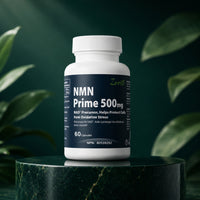
Prepared by the research team at Zeroo Health. Zeroo is a Canadian longevity and wellness company. Our flagship NMN supplement, NMN Prime 500mg, is third-party lab tested and licensed by Health Canada (NPN 80139252).
References
- Christen S, Redeuil K, Goulet L, et al. The differential impact of three different NAD+ boosters on circulatory NAD and microbial metabolism in humans. Nature Metabolism. 2026 Jan 15. doi:10.1038/s42255-025-01421-8. https://www.nature.com/articles/s42255-025-01421-8
- Berven H, Svensen M, Eikeland H, et al. The NAD-brain pharmacokinetic study of NAD augmentation in blood and brain using oral precursor supplementation. iScience. 2026. doi:10.1016/j.isci.2026.114764. https://www.cell.com/iscience/fulltext/S2589-0042(26)00139-2
- Conze D, Brenner C, Kruger CL. Safety and metabolism of long-term administration of NIAGEN (nicotinamide riboside chloride) and pharmacokinetics of nicotinamide riboside in healthy volunteers. (NR human pharmacokinetic study.) https://www.ncbi.nlm.nih.gov/pmc/articles/PMC5718430/
- Examine.com. Nicotinamide Mononucleotide (NMN): benefits, dosage, and safety summary. https://examine.com/supplements/nicotinamide-mononucleotide/
- Healthline. NMN (Nicotinamide Mononucleotide): benefits, side effects, and dosage. https://www.healthline.com/health/nmn-nicotinamide-mononucleotide-benefits-side-effects-and-dosage
- Health Canada. Natural and Non-prescription Health Products. https://www.canada.ca/en/health-canada/services/drugs-health-products/natural-non-prescription.html