
A FIFA footballer can run more than 10 kilometres in one match. Sprints, tackles, sudden turns, then back on the training pitch a couple of days later. The body takes a beating. So it makes sense that players, and the people who look after them, are always hunting for an edge in energy and recovery.
One name keeps coming up in that hunt: NMN.
It is short for nicotinamide mononucleotide. You will see it all over the longevity world and, more and more, in sport. And yes, there is a real football link, starting with one of the most famous players who ever lived. Let's get into who actually uses it and whether it lives up to the talk.
What is NMN, in plain words?
Your body runs on a molecule called NAD+. Think of it as the fuel your cells use to make energy. It also helps repair DNA and keep your cells doing their daily jobs.
The problem is that NAD+ drops as you age. By middle age, you have roughly half of what you had as a young adult. NMN is one of the raw materials your body uses to make more NAD+. Take NMN, and you are giving your cells more of what they need to build it back up.
One thing worth clearing up early: NMN does not hand you NAD+ directly. It is a building block your body turns into NAD+. Keep that in mind when you read a label promising the moon.
Why would a footballer care about NMN?
The pitch lines up with what NMN is supposed to help:
- Energy. NAD+ sits right at the centre of how your cells make the fuel your muscles burn.
- Recovery. Footballers rarely get long rest between games. Faster cell repair is the dream.
- Late-game stamina. Who is still sharp in the last 15 minutes often decides the result.
- A longer career. Players want to stay healthy on the pitch and long after they hang up the boots.
That is the pitch. The real question is whether it holds up. We will get to the science. First, the names.
Does David Beckham take NMN?
David Beckham co-founded a wellness brand called IM8 Health, backed by the health company Prenetics. In October 2025, IM8 launched a longevity supplement built around NAD+ boosters, and NMN is one of its main ingredients. Beckham has said supplements have been part of his daily routine for years, and that he helped build IM8 to make that routine simpler.
So the most famous name in the NMN-and-football story is not some secret recovery leak. It is a footballer who put his name on a product that contains NMN and takes it himself. That is about as direct as it gets.
Which other athletes take NMN?
Plenty of athletes in tough, body-punishing sports have spoken about NMN or its close cousin NAD+:
- Jay Cutler (NFL). The former Chicago Bears quarterback started NAD+ IV therapy after retiring, to help his body and brain bounce back from years of concussions. He told GQ he was "doing NAD therapy" to put off the long-term damage.
- Kevin Love (NBA). The All-Star has talked about monthly NAD+ IV drips as a longevity tool and says he can feel the difference in his focus.
- Jesse Smith (water polo). The five-time Olympic captain teamed up with a longevity brand in 2022 to promote its NMN formula.
- Ben Khoo (triathlon). The Singaporean Ironman record-holder has spoken openly about using NMN in training. He checked it was not banned before he started.
- Shannon Sharpe (NFL Hall of Famer). Reported to use NAD+ boosters as part of his wellness routine.
IM8 also says it is used by athletes who get drug tested all the time, including tennis number one Aryna Sabalenka and F1 driver Ollie Bearman. Away from sport, names like Joe Rogan have said they take NMN too.
A couple of honest notes so you are not misled. Some of these athletes use NAD+ through an IV drip, not NMN capsules. Those are not the same thing. An IV puts NAD+ straight into your blood at a clinic. NMN is a daily pill or powder you take at home that your body then turns into NAD+. And outside Beckham's brand, you will not find many current top-flight footballers talking about NMN in public. Most keep their supplement stack to themselves. But the interest has clearly spread into team and contact sports, not just the longevity crowd.
What does the science actually say?
Here is the part you should not skip, because the headlines run ahead of the proof.
The most promising human study so far was published in the Journal of the International Society of Sports Nutrition. Runners who took NMN improved their aerobic capacity, which means their muscles used oxygen more efficiently during endurance work. That is a solid, peer-reviewed result, and endurance is a big part of football.
A newer 2026 pilot study in the same journal looked at recovery, and this is where it gets interesting. NMN did lower inflammation in the muscle after hard exercise. Sounds perfect for a player with games piling up. But the same study found a downside: cutting that inflammation also seemed to hold back a normal training gain, the way muscle builds up more mitochondria after a workout. It was also tiny, just 11 young men.
The takeaway is not "NMN speeds up recovery, full stop." Inflammation after training is not always the bad guy. A lot of the time it is how your body gets stronger. So the recovery story is messier than the ads make it sound.
A few more things to keep in perspective:
- Most of the strongest NMN data still comes from animal studies, not big human trials.
- The human studies that show benefits usually run about 4 to 12 weeks, so the long game is not well mapped yet.
- NMN is nowhere near as well studied as creatine, which has decades of evidence behind it.
Bottom line on the science: early results look promising, especially for endurance, but NMN is not a proven, slam-dunk performance booster. Anyone who tells you it is guaranteed to change your game is selling you something.
Is NMN banned in football?
If you compete and get tested, read this part twice.
Right now, NMN is not on the World Anti-Doping Agency (WADA) banned list. That is why athletes in several sports have felt fine using it. But two rules never change:
- What is in your body is your responsibility. If a banned substance shows up in a test, the player is on the hook, even if it was an accident. Canada's anti-doping program runs on the same WADA code, and that banned list gets updated every year. So today's status is not a forever promise.
- Contamination is the real danger. Supplements can pick up banned substances during manufacturing. The safe move is to buy products that carry a sport certification like NSF Certified for Sport or Informed Sport, and brands that share third-party purity tests. This is also why a certification beats a famous face. Beckham's IM8, for example, says it is NSF Certified for Sport. That is the kind of mark a tested athlete should look for on any NMN they buy.
If you play at a level with testing, check the current WADA list yourself and stick to certified, tested products. Do not let any blog, including this one, be the final word.
Is NMN legal in Canada and the US?
Yes in both, but they handle it differently.
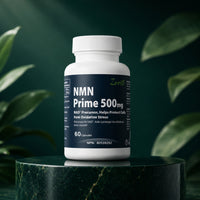
Canada. Health Canada regulates NMN as a Natural Health Product. It can be sold here legally when it is licensed and carries a Natural Product Number, or NPN, on the label. Licensed NMN products are already on the market in Canada. That NPN is your green light: it means Health Canada reviewed the product for safety, quality, and the claims it can make before it ever hit the shelf. For Canadian shoppers, the rule is simple. Look for the NPN. Zeroo Health's NMN Prime 500mg is one example: it is made in a GMP-certified Canadian facility, carries a Health Canada NPN (80139252), and is third-party tested for purity and potency.
United States. In letters dated September 2025, the FDA reversed its old position and confirmed NMN counts as a dietary supplement, with follow-up letters in December 2025. That ended almost three years of confusion and brought NMN back to the big US retailers. It is still treated there as a New Dietary Ingredient with some notification rules for makers.
Here is a fair point for Canadian buyers: the US does not require supplements to be checked before they go on sale, while Canada's NPN system does. So a licensed Canadian product comes with a built-in layer of review. Outside North America it varies. Europe, for one, still reviews NMN under its Novel Food rules, so check your local status.
How do you take NMN?
NMN is not a pre-match energy hit like caffeine. It is a daily, long-game supplement aimed at your cells, so the athletes who use it treat it like a habit, not a shortcut.
Human studies have mostly used doses from about 500 mg to 900 mg a day, with some short-term research going higher. A 500 mg daily serving sits comfortably in that range. That is the dose in Zeroo Health's NMN Supplement, a Canadian-made NMN that is Health Canada licensed and third-party tested. Most guidance says take it in the morning, with or just before food. None of that replaces real medical advice, so talk to a doctor first, especially if you take medication or have a health condition.
The smartest setup is the one elite sport already uses. Food first. Sleep and training dialled in. Then add something like NMN to support the base, not to cover for a weak one.
FAQ
Does David Beckham take NMN? Beckham co-founded the supplement brand IM8 Health, whose longevity formula features NMN, and he has said supplements are part of his daily routine. So he is closely tied to NMN both as a co-founder and a user.
Do other footballers take NMN? Public examples from current top players are rare, since most keep their routines private. Athletes in other sports, like former NFL quarterback Jay Cutler and NBA star Kevin Love, have spoken about using NMN or NAD+.
Can NMN improve football performance? Early human research links NMN to better aerobic capacity, which could help endurance. The evidence is still early, and NMN is less proven than supplements like creatine.
Is NMN a banned substance in football? NMN is not on the current WADA banned list. But players are responsible for anything in their system, the list changes each year, and contamination is a real risk. Use certified, tested products and check the latest status.
Is NMN safe? Research so far suggests NMN is generally well tolerated in healthy adults at the doses studied. Check with a doctor before starting, especially if you have a health condition or take medication.
Is NMN legal in Canada? Yes. It is sold legally as a licensed Natural Health Product with a Health Canada NPN. Look for that NPN on the label, since it means the product was reviewed before sale.
When should I take NMN? Most guidance says once a day, often in the morning, sometimes on an empty stomach. It is a long-term supplement, not a pre-match booster.
The bottom line
Footballers have good reason to be curious about NMN. The energy and endurance science fits the sport, a football icon in David Beckham has put his name behind a product that uses it, and athletes across other sports are on board with NMN or NAD+. At the same time, the research is still early, the recovery findings are messier than the headlines, and the anti-doping responsibility always lands on the player.
If you want to support your energy and recovery the way more athletes are starting to, a clean, third-party-tested NMN is the place to start. If you are in Canada, Zeroo Health's NMN Prime 500mg fits the bill: a 500 mg daily dose, made in Canada, Health Canada licensed with an NPN, and third-party tested. Pick purity and proof over hype, and build it on top of good food, sleep, and training.
This article is for general information only and is not medical advice. NMN supplements are not meant to diagnose, treat, cure, or prevent any disease. Talk to a qualified healthcare professional before starting any new supplement. If you compete under anti-doping rules, confirm the current status of any product before you use it.