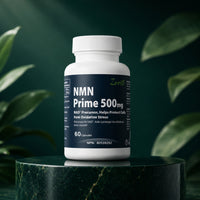

zerIf you have been exploring anti-aging supplements or reading about longevity science, you have almost certainly seen NMN (Nicotinamide Mononucleotide) trending everywhere. Many people call it the “cellular energy booster” or even the molecule that helps you feel younger. With all the excitement, the most important question remains clear: Is NMN actually safe to take?
As of 2026, the answer is encouraging but not absolute. Human studies show positive safety results, but long-term data is still developing. On top of that, the rules in Canada are very different from the United States, which adds more confusion for consumers.
This guide breaks everything down: what NMN is, what clinical research says about safety, possible side effects, and how Health Canada regulates NMN supplements.
What Is NMN and Why Does Your Body Need It?
NMN is a molecule that your body uses to create NAD+ (Nicotinamide Adenine Dinucleotide). NAD+ is essential for:
-
Cellular energy production
-
DNA repair
-
Metabolic function
-
Healthy aging
The challenge is that NAD+ levels drop sharply as we age. By your 40s or 50s, you can lose up to half of your youthful NAD+ levels. This decline is linked to low energy, slower recovery, and age-related changes. To counter this, researchers have focused on NAD+ precursors such as NMN and NR (Nicotinamide Riboside), both of which the body can convert into NAD+. While NR has been studied longer and is widely available, but NMN is considered a more direct precursor, which is why it has gained significant attention in longevity research.

NMN is believed to help replenish NAD+ levels, which is why many people feel more energized or clear-headed when taking it.
Is NMN Safe? What Human Studies Show
For many years, NMN research was based mostly on animal studies. That changed between 2022 and 2025 when higher quality human trials became available.
Here is what those studies found:
1. NMN appears safe in short-term human trials
Clinical trials using randomized and placebo-controlled methods show that NMN is generally well tolerated.
2. Most studies use doses between 250 mg and 1200 mg
Within this range, researchers rarely report serious adverse events.
3. No signs of toxicity in blood work
Studies measuring liver enzymes, kidney function, inflammation markers, and blood safety panels show no harmful changes after weeks of supplementation.
4. The missing data
The biggest gap is long-term information. We do not yet know the effects of taking NMN for many years. This is why many experts suggest:
-
Starting with lower doses
-
Cycling the supplement
-
Monitoring how your body responds
Potential Side Effects of NMN
NMN is considered gentle, but some people do experience mild reactions, especially in the beginning.
Common mild side effects
-
Bloating or digestive discomfort
-
Mild nausea
-
Soft stools or diarrhea
-
Light headaches
These usually improve if you reduce the dose or take NMN with food.
What about flushing?
Niacin can cause facial flushing, but NMN rarely does. If you experience strong flushing, it may be a sign of impurities or poor manufacturing quality.
Theoretical Concerns: NMN and Cancer
Online debates often mention a possible link between NAD+ boosters and cancer growth. Here is the scientific explanation:
-
NAD+ supports healthy cell repair, which is good
-
It may also support fast growth of existing cancer cells in theory
Important note:
Human trials have not shown NMN to cause cancer. There is no clinical evidence proving that NMN increases cancer risk in healthy adults.
However, individuals with active cancer should avoid NAD+ boosters unless supervised by a doctor.
Is NMN Legal in Canada? Understanding Health Canada Rules
This part is often misunderstood because the rules in the US and Canada are very different.
In the United States
The FDA placed restrictions on NMN in supplements in 2022 because it was being investigated as a drug. After heavy industry pressure, the FDA relaxed those restrictions in late 2025. US rules remain inconsistent from one brand to another.
In Canada
Canada has a much clearer and more reliable system.
NMN is legal in Canada when sold as a Natural Health Product (NHP).

What this means for you
Health Canada oversees:
-
Ingredient safety
-
Dose limits
-
Quality control
-
Manufacturing standards
-
Label accuracy
This creates a safer environment for consumers compared to unregulated imports.
The Most Important Safety Check: Look for the NPN
In Canada, every approved NMN product must have an NPN (Natural Product Number). This eight digit number confirms:
-
Health Canada has reviewed the product
-
The ingredients are safe at the listed dose
-
The product is manufactured according to strict standards
If your NMN bottle does not show an NPN number, it is not approved for sale in Canada.
How to Take NMN Safely
Start with a low dose
Begin with 250 to 300 mg per day. This helps your body adjust.
Common effective dose
Most positive research is in the 500 mg to 900 mg range.
Take NMN in the morning
This aligns with your natural daytime NAD+ production and may help avoid sleep disruption.
Can you take NMN with food?
Yes. Some people find that taking NMN with a small amount of healthy fat improves digestion comfort.
Final Verdict: Is NMN Safe?
Based on current human research, NMN appears to be safe for healthy adults when taken at recommended doses. Side effects are usually mild, and serious risks have not been shown in studies so far.
For Canadians, the safety profile is even stronger because Health Canada requires an NPN number and strict manufacturing quality checks.
Still, because long-term data is limited, you should talk to a healthcare professional if:
-
You take prescription medications
-
You have chronic health conditions
-
You are pregnant or breastfeeding
-
You have a cancer diagnosis
Used responsibly, NMN is one of the most promising supplements in the cellular health and longevity category.