
If you have been paying attention to longevity research over the past decade, you have almost certainly come across NMN Beta. Also referred to as Beta NMN or NMN+, this molecule, short for beta-nicotinamide mononucleotide, has moved from laboratory curiosity to one of the most studied supplement compounds in the field of healthy aging. But what does it actually do, and what does the science say so far?
This guide explains the biology clearly, summarizes the human clinical research accurately, and flags what is still uncertain. We believe you deserve honest information, not hype.
What Is NMN Beta?
Beta-nicotinamide mononucleotide, commonly called NMN Beta or Beta NMN, is a naturally occurring molecule found in every living cell. It belongs to the family of vitamin B3 derivatives and serves as a direct precursor to NAD+ (nicotinamide adenine dinucleotide), a coenzyme your cells cannot function without. The "beta" designation refers to the specific molecular configuration (β-NMN) that is biologically active and used in all published human clinical research.
Small amounts of NMN Beta are present in foods such as edamame, broccoli, avocado, cabbage, and cow's milk, but the concentrations from diet alone are far too low to meaningfully affect circulating NAD+ levels. That is the reason supplemental Beta NMN has attracted so much scientific and consumer interest.
Why NAD+ Is Central to Aging
NAD+ is not a niche molecule. It participates in hundreds of enzymatic reactions across every tissue in your body. Its roles include powering the mitochondria (your cellular energy factories), fueling DNA repair mechanisms, regulating gene expression through enzymes called sirtuins, and supporting immune cell activity.
The critical problem is that NAD+ levels decline with age, measurably and substantially. Plasma NAD+ concentrations can fall roughly 50% or more from early to late adulthood, with parallel declines observed in the skin, liver, and muscle tissue. This systemic reduction limits the activity of sirtuins and other longevity-linked enzymes.
Several biological processes accelerate this decline. Enzymes involved in DNA repair (PARPs), inflammation (CD38), and neuronal stress (SARM1) all consume NAD+ heavily. In aging and disease, this biochemical drain outpaces the body's ability to replenish its supply through diet and normal metabolism alone.
NAD+ directly supports four key areas of cellular health:
Cellular Energy: NAD+ is essential for mitochondrial function, driving the production of ATP, the molecule your cells use as fuel.
DNA Repair: NAD+ fuels PARP enzymes that detect and repair damaged DNA, helping maintain genomic stability as you age.
Sirtuin Activation: Sirtuins, proteins linked to longevity and metabolic health, require NAD+ as a substrate to function properly.
Immune Support: NAD+ supports immune cell metabolism and inflammation regulation, both of which change significantly with age.
How NMN Beta Raises NAD+ Levels
NMN Beta enters the body's salvage pathway, the main route cells use to recycle and rebuild NAD+. This pathway accounts for roughly 85% of the body's total NAD+ production. NMN is converted to NAD+ through the enzyme nicotinamide mononucleotide adenylyltransferase (NMNAT), making it one of the most direct precursors available.
Research has identified a dedicated transporter protein called Slc12a8 that allows Beta NMN to enter cells directly, particularly in the small intestine. This means supplemental NMN Beta does not need to be broken down into smaller components before it can begin contributing to NAD+ synthesis, a key advantage over less direct precursors.
This efficient conversion pathway is why NMN+ supplementation has become a focus of longevity researchers. Human clinical trials have consistently shown that oral NMN Beta supplementation raises blood NAD+ levels, and this finding is one of the most reliably replicated outcomes in the current body of research.
What the Clinical Research on NMN Beta Shows
It is important to separate what has been shown in humans from what has only been shown in animal models. Here is an honest summary of the current evidence on Beta NMN supplementation.
NAD+ Elevation: Consistently Demonstrated
Multiple randomized, placebo-controlled human trials have confirmed that oral NMN Beta supplementation raises blood NAD+ levels. A 2023 multicenter double-blind trial by Yi et al. tested doses of 300, 600, and 900 mg per day of β-NMN in healthy middle-aged adults and found dose-dependent increases in blood NAD+. A 2024 double-blind study in adults aged 65 to 75 confirmed that 250 mg per day of NMN+ over 12 weeks significantly raised blood NAD+ and its metabolites compared to placebo.
Clinical Trial Highlight, 2024: A randomized, placebo-controlled, double-blind study in healthy older adults (65 to 75 years) found that 12 weeks of NMN supplementation raised blood NAD+ levels, maintained walking speed (shorter 4-meter walking time versus placebo), and improved sleep quality scores. No adverse effects related to NMN consumption were observed.
Physical Performance: Promising But Mixed
A 2024 systematic review published in Cureus analyzed randomized controlled trials on NMN and physical performance and found improvements in physical performance measures in several studies. A 2023 double-blind trial with participants aged 55 to 70 found that 500 mg per day of NMN alongside aerobic exercise raised whole-blood NAD+ significantly, from a placebo average of 23.8 µM to 41.7 µM in the NMN group, and was associated with increased aerobic capacity. The post-hoc analysis by Yi et al. found a correlation between NAD+ increases and improved walking test results, particularly in higher-dose groups.
However, a 2025 meta-analysis in the Journal of Cachexia, Sarcopenia and Muscle found that effects on muscle mass and strength were small and not clinically significant across the pooled data, and called for more research specifically in older adults with sarcopenia. The field acknowledges that study design, dose, and baseline NAD+ levels all appear to influence outcomes.
Metabolic Health: Early Signals
A 2025 systematic review with meta-analysis published in Critical Reviews in Food Science and Nutrition analyzed 12 randomized controlled trials (513 participants total) on NMN and glucose and lipid metabolism. The analysis found a significant overall effect of NMN on raising blood NAD+. For most metabolic markers, fasting glucose, triglycerides, and cholesterol, the differences versus placebo were not statistically significant across the pooled data. The authors noted that some individual trials showed improvements in diastolic blood pressure, LDL cholesterol, and body weight, and called for larger, longer studies. They also raised concerns about risk of bias in several included trials.
This is an area where the evidence is still developing. The honest position is that NMN raises NAD+, and there is biological reason to believe this should support metabolic health, but the human data on specific metabolic endpoints is not yet conclusive.
Safety: No Serious Adverse Events Reported
Across the completed human trials to date, NMN supplementation has not been associated with serious adverse effects. A 2023 review in Advances in Nutrition summarizing clinical trial safety data concluded that NMN supplementation in doses up to 500 mg per day showed no adverse effects in the studies reviewed. Researchers do note that trial sizes have been small, so rare adverse effects could be missed in the current data, and that longer-term safety data in humans is still limited.
What Remains Uncertain
Transparency matters here. The NMN research landscape is genuinely exciting, but several important questions do not yet have clear answers in human populations.
Individual responses to NMN vary considerably. Baseline NAD+ levels, which differ by age, genetics, sex, ethnicity, and lifestyle, appear to influence how much someone benefits from supplementation. People with lower baseline NAD+ may see larger effects. This variability has made it difficult to draw universal conclusions across clinical trials.
Most human trials to date have been short (8 to 16 weeks) and small (fewer than 100 participants). Longer trials tracking hard clinical outcomes such as disease incidence, cognitive decline, or lifespan have not yet been completed. Much of the most compelling evidence for NMN's effects on aging markers still comes from animal models, particularly mice, where results have been striking. Whether and to what degree those findings translate to humans remains an active area of investigation.
What to Look for in an NMN Beta Supplement
Not all NMN Beta products are equal. When choosing a Beta NMN or NMN+ supplement, the following factors matter most based on the science and manufacturing standards available today.
Purity and third-party testing. NMN is an active compound, and the purity of what you are actually getting should be verified by an independent laboratory, not just the manufacturer's own claims.
Dose. Human clinical trials demonstrating NAD+ elevation have used doses ranging from 250 mg to 900 mg daily. A 500 mg dose sits within the well-studied range and aligns with what multiple trials have used.
Regulatory standing. In Canada, the Natural Health Product (NHP) framework requires that supplements meet purity, safety, and efficacy standards before receiving a Health Canada product licence (NPN number). This is a meaningful quality signal.
Manufacturing standards. Look for GMP (Good Manufacturing Practice) certification as a baseline indicator of consistent production quality.
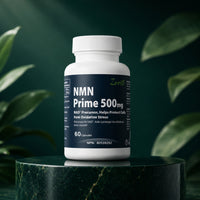
NMN Prime 500mg by Zeroo Health
Canada's premium NMN Beta supplement, third-party lab tested, Health Canada licensed (NPN 80139252), GMP certified, and made in Canada.
About Zeroo Health
Zeroo Health is a Canadian longevity and wellness brand based in Vancouver, British Columbia. The company was founded by a group of Canadian longevity enthusiasts and health experts who believe that the cellular decline associated with aging is not inevitable, it is manageable.
Zeroo Health's flagship product, NMN Prime 500mg, delivers pure NMN Beta (β-nicotinamide mononucleotide), the same biologically active form used in published clinical trials. It is licensed by Health Canada under NPN 80139252, manufactured in a GMP-certified Canadian facility, and third-party tested for purity and potency. Each capsule delivers a 500 mg dose of NMN+, a quantity consistent with the dose ranges used in published human clinical trials.
The brand's guiding philosophy is direct: young is a choice, not a chance. Their focus on a single, rigorously sourced molecule reflects a deliberate approach to supplementation rooted in the science, not in trend-chasing.
NMN Prime 500mg is available individually or as a three-bottle value pack.
Disclaimer: This article is for educational and informational purposes only. It is not intended to diagnose, treat, cure, or prevent any disease. NMN supplements are not a replacement for a balanced diet, regular physical activity, or medical care. If you have a health condition or are taking medications, consult your healthcare provider before starting any new supplement.
Scientific References
- Yi L, Maier AB, Tao R, et al. The efficacy and safety of β-nicotinamide mononucleotide (NMN) supplementation in healthy middle-aged adults: a randomized, multicenter, double-blind, placebo-controlled, parallel-group, dose-dependent clinical trial. GeroScience. 2023;45(1):29–43. https://pubmed.ncbi.nlm.nih.gov/36482258/
- Irie J, et al. Ingestion of β-nicotinamide mononucleotide increased blood NAD levels, maintained walking speed, and improved sleep quality in older adults in a double-blind randomized, placebo-controlled study. GeroScience. 2024. https://pmc.ncbi.nlm.nih.gov/articles/PMC11336149/
- Wen H, et al. Improved Physical Performance Parameters in Patients Taking Nicotinamide Mononucleotide (NMN): A Systematic Review of Randomized Control Trials. Cureus. 2024;16(8):e65961. https://pmc.ncbi.nlm.nih.gov/articles/PMC11365583/
- Zhang J, Poon ETC, Wong SHS. Efficacy of oral nicotinamide mononucleotide supplementation on glucose and lipid metabolism for adults: a systematic review with meta-analysis on randomized controlled trials. Critical Reviews in Food Science and Nutrition. 2025;65(22):4382–4400. https://pubmed.ncbi.nlm.nih.gov/39116016/
- Song Q, et al. The Safety and Antiaging Effects of Nicotinamide Mononucleotide in Human Clinical Trials: an Update. Advances in Nutrition. 2023;14(6):1416–1435. https://pubmed.ncbi.nlm.nih.gov/37619764/
- Rahman SU, Qadeer A, Wu Z. Role and Potential Mechanisms of Nicotinamide Mononucleotide in Aging. Aging and Disease. 2024;15(2):565–583. https://pmc.ncbi.nlm.nih.gov/articles/PMC10917541/
- Poddar SK, et al. Nicotinamide Mononucleotide: Exploration of Diverse Therapeutic Applications of a Potential Molecule. Frontiers in Pharmacology. 2024. https://www.frontiersin.org/journals/pharmacology/articles/10.3389/fphar.2024.1436597/full
- Petrovic D, et al. Nicotinamide Mononucleotide Supplementation: Understanding Metabolic Variability and Clinical Implications. Nutrients. 2024. https://pmc.ncbi.nlm.nih.gov/articles/PMC11205942/
- Imai SI. NAD World 3.0: the importance of the NMN transporter and eNAMPT in mammalian aging and longevity control. npj Aging. 2025. https://www.nature.com/articles/s41514-025-00192-6
- Braun D, et al. The Effect of Nicotinamide Mononucleotide and Riboside on Skeletal Muscle Mass and Function: A Systematic Review and Meta-Analysis. Journal of Cachexia, Sarcopenia and Muscle. 2025. https://pmc.ncbi.nlm.nih.gov/articles/PMC12022230/
- Nadeeshani H, Li J, Ying T, Zhang B, Lu J. The role of nicotinamide mononucleotide (NMN) in anti-aging, longevity, and its potential for treating chronic conditions. Molecular and Cellular Biochemistry. 2022. https://pubmed.ncbi.nlm.nih.gov/35441939/
- Garber K. Recent research into nicotinamide mononucleotide and ageing. Nature. 2022. https://www.nature.com/articles/d42473-022-00002-7