
If you’re over 40, you may have noticed a shift that’s hard to describe. Maybe you feel like your “internal battery” doesn’t hold a charge as well as it used to. Workouts take longer to recover from, afternoon fatigue hits harder, and overall you just feel… slower.
For decades, we brushed this off as “getting older.” But over the last several years, scientists have taken a much closer look at what’s actually going on inside the body.
Again and again, their findings point to one key molecule that quietly powers almost everything: NAD+.
It’s become one of the biggest topics in longevity science, but what is it, why does it drop as we age, and is there anything we can do about it?
Let’s break it down in a normal, non-scientific way.
What Is NAD+? (Think of It as the Body’s Delivery Truck)
NAD+ stands for Nicotinamide Adenine Dinucleotide. It sounds complicated, but you don’t need to memorize the name. Just know this: NAD+ is found in every single cell in your body, and nothing functions without it.
A simple way to picture it:
Your body is like a giant city.
Your cells are the buildings.
Your mitochondria are the power plants.
NAD+ is the truck delivering fuel to keep the lights on.
NAD+ Helps Create Energy
Inside each cell, mitochondria turn the food you eat into usable energy (ATP). But they can’t do this alone, they need NAD+ to “carry” electrons into the energy-making process.
If NAD+ suddenly disappeared, you couldn’t survive more than a few seconds.
When NAD+ levels are high then you produce energy efficiently.
When they’re low then metabolism slows and everything feels sluggish.
NAD+ Fuels the Cell’s Repair Systems
NAD+ also powers sirtuins, your body’s “longevity proteins.” They repair DNA, reduce inflammation, and help keep cells functioning properly.
But without NAD+, sirtuins can’t work. It’s basically the currency they operate on.
High NAD+ means active repair.
Low NAD+ means the repair crews go quiet.
What Happens After 40? (The Big Drop)
Here’s the unfortunate part: NAD+ levels naturally decline as we age.
By your 40s and 50s, your NAD+ can be about half of what it was in your 20s.
This drop lines up almost perfectly with:
-
fatigue
-
slower recovery
-
brain fog
-
weight gain
-
weaker metabolism
- more inflammation
So what causes this decline? Researchers point to three main reasons.
Your Body Is Using More NAD+ Than Before
As we age, we accumulate more cellular damage—sun exposure, pollutants, stress, diet, and just normal wear-and-tear.
To fix this damage, your body uses an enzyme called PARP1, which burns through NAD+ like crazy.

Your Body Makes Less of It
Your cells have a recycling system (the “salvage pathway”) that rebuilds NAD+ after it’s used. But this system slows down with age because the main recycling enzyme, NAMPT, declines.
So you’re burning more NAD+ while also making less of it.
CD38,The “Greedy” NAD+-Eating Enzyme
One of the biggest discoveries in aging research is an enzyme called CD38, found on immune cells. As inflammation increases with age also known as “inflammaging” CD38 levels rise.
The problem? CD38 aggressively destroys NAD+.
This enzyme is now believed to be one of the major drivers of NAD+ loss in older adults.
What Low NAD+ Actually Feels Like
The symptoms of low NAD+ usually show up gradually:
Slower Metabolism and Weight Gain
Your body becomes less efficient at burning fuel, which can lead to fat gain and insulin resistance.
Brain Fog and Mental Fatigue
Your brain uses a huge amount of energy. When NAD+ is low, neurons can’t fire as quickly or as clearly.
Decreased Blood Flow and Endurance
Sirtuins help keep blood vessels flexible. When NAD+ drops and sirtuins slow down, circulation suffers—especially to muscles and skin.
Can We Boost NAD+? (Yes—at Least Partially)
You can’t stop aging, but research shows that you can increase NAD+ levels through lifestyle habits and supplements.
Lifestyle Changes That Boost NAD+
Fasting or Time-Restricted Eating
Going 12–16 hours without food naturally raises NAD+ and activates sirtuins.
HIIT (High-Intensity Interval Training)
Short bursts of intense exercise significantly increase NAD+ production in muscles.
Supplement Options (NAD+ Precursors)
You can’t take NAD+ directly because the molecule is too large to survive digestion. But you can take smaller building blocks that your body turns into NAD+.
The two most studied precursors are:
NR (Nicotinamide Riboside)
A form of vitamin B3 that has been shown in humans to increase NAD+ levels safely.
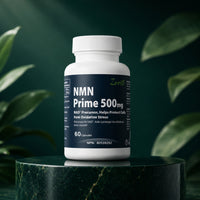
NMN (Nicotinamide Mononucleotide)
One step closer to NAD+ than NR.
Animal studies show strong effects on metabolism, energy, and blood flow.
Human studies so far look promising and safe.
A Note on Niacin
It can raise NAD+ but tends to cause flushing and may not activate sirtuins as effectively.
Reducing NAD+ Loss (The CD38 Strategy)
Even if you boost NAD+, CD38 can still destroy it. So researchers are looking at natural CD38 inhibitors:
- Apigenin (found in parsley, chamomile, oregano)
- Quercetin (onions, apples)
These may help “seal the leak” so more NAD+ stays available for energy and repair.
A lot of people take a combo approach:
boost production (NR or NMN) + reduce destruction (Apigenin or Quercetin).
Is It Safe?
For healthy adults, NAD+ boosters appear safe in current research.
The only area of caution: anyone with a history of cancer should speak with their doctor first, since NAD+ supports cell growth in general.
Conclusion: Think of Aging Like a Dimmer Switch
Instead of viewing aging as a downhill slide, imagine it as a dimmer switch. As NAD+ drops, your biological “lights” dim energy, metabolism, repair, and mental sharpness.
The good news? You can turn that switch back up. Through fasting, exercise, smart nutrition, and possibly supplements, you may be able to restore more youthful NAD+ levels and feel the difference.
You can’t become 20 again, but you can absolutely support your body so it runs better, longer.
Quick Takeaways
-
Try HIIT 2x per week
- Consider 12–16 hours of overnight fasting
-
Add apigenin-rich foods (chamomile, parsley)
-
Look into high-quality NMN or NR supplements
- Talk to your doctor if you have any health conditions
(Disclaimer: This is informational only and not medical advice. Always consult a healthcare professional before starting supplements.)
References
-
“NAD+ metabolism and its influence on cellular processes.” Cell Metabolism.
https://www.sciencedirect.com/science/article/pii/S155041311830129X
-
“CD38 dictates age-related NAD decline and mitochondrial dysfunction.” Nature Metabolism / Cell Metabolism.
https://www.cell.com/cell-metabolism/fulltext/S1550-4131(16)30227-2
-
“Exercise training reverses age-induced decline in NAD+ salvage capacity in human skeletal muscle.” Nature Aging.
https://www.nature.com/articles/s41467-019-12524-6