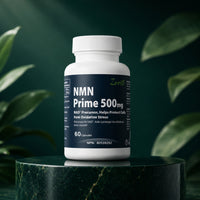

Have you noticed that as you get older, your energy is not the same as it used to be? It may take longer to recover from exercise. A bad night of sleep can affect you for days. Even getting through a busy afternoon can feel harder than before. For a long time, people believed this drop in energy was just a normal part of aging.
Today, research shows something different. Aging is not just a random process. It happens because of changes inside our cells. Since aging is biological, it may be possible to support and slow some of these changes.
This is where Nicotinamide Mononucleotide, or NMN, comes in.
In recent years, NMN has gained attention for its role in healthy aging. Many researchers are studying it to better understand how it supports energy and cell function. But what exactly is NMN, and how does it work?
This guide explains NMN in clear and simple terms, including how it works in the body and what benefits research suggests it may provide.
What Is NMN?
NMN is related to vitamin B3, also known as niacin. It is a natural compound found in the body and in small amounts in certain foods.
The main reason NMN is important is because it helps your body produce a molecule called NAD+. NAD+ stands for Nicotinamide Adenine Dinucleotide. This molecule is essential for life. Every cell in your body needs it to function.
You can think of NMN as a building material. Once inside the body, NMN is converted into NAD+, which helps power many important processes.
Why NAD+ Is Important
NAD+ plays two major roles in the body.
1. Helps Produce Energy
Inside your cells are structures called mitochondria. They turn food and oxygen into energy. NAD+ is required for this process. Without enough NAD+, your cells cannot make the energy they need.
As NAD+ levels drop, energy production becomes less efficient. This can lead to fatigue and slower recovery.
2. Supports Cell Repair and Healthy Aging
NAD+ also activates certain proteins, including sirtuins. These proteins help repair DNA, manage inflammation, and support overall cell health. When NAD+ levels are low, these protective systems do not work as well.
What Happens to NAD+ As We Age
When we are young, NAD+ levels are high. Over time, the body produces less NAD+. At the same time, the body uses up NAD+ more quickly.
By middle age, NAD+ levels can be much lower than they were in early adulthood. This drop is linked to reduced energy, slower metabolism, and other signs of aging.
NMN supplementation aims to raise NAD+ levels again by giving the body more of the material it needs to produce it.
How NMN Works in the Body
After you take NMN, it is absorbed and transported into cells. Research has found that the body has a specific transporter that helps move NMN into cells efficiently.
Once inside the cell, NMN is quickly converted into NAD+. Studies show that NAD+ levels can increase shortly after supplementation.
By raising NAD+ levels, NMN helps support energy production and cell repair processes.
Potential Benefits of NMN
Research is still ongoing, but studies suggest several possible benefits.
1. Supports Healthy Aging and DNA Repair
DNA is damaged daily by sunlight, stress, and normal body processes. The body repairs this damage using enzymes that depend on NAD+. By increasing NAD+, NMN may help support these repair systems.
2. Improves Energy and Metabolism
Lower NAD+ levels can affect how the body processes fats and sugars. Some animal studies show that NMN may improve insulin sensitivity and support healthy metabolism. This may help maintain steady energy levels.
3. Supports Brain Function
The brain requires a large amount of energy. When NAD+ levels drop, brain cells may not function as efficiently. Research suggests NMN may help support memory, focus, and overall brain health.
4. Promotes Heart and Blood Vessel Health
Healthy blood vessels are important for circulation and blood pressure control. NAD+ helps maintain the cells that line blood vessels. Increasing NAD+ may support better circulation.
5. Supports Muscle Function
Muscle cells rely heavily on mitochondria for energy. Some studies show NMN may help maintain muscle strength and endurance as we age.
Most of these findings come from animal studies, though human research is growing.
Can You Get NMN From Food?
NMN is found in small amounts in foods such as:
-
Edamame
-
Broccoli
-
Cabbage
-
Cucumber
-
Avocado
-
Tomatoes
However, the amounts in food are very small. For example, broccoli contains about 1 milligram of NMN per 100 grams. To reach common supplement amounts, you would need to eat an unrealistic quantity of these foods daily.
Because of this, people who want higher levels typically use supplements.
Human Research, Dosage, and Safety
Human clinical trials show that NMN is generally well tolerated. Studies report that oral NMN increases NAD+ levels in the blood.
Common dosages in research range from 250 mg to 1000 mg per day. Lower amounts are often used for general wellness, while higher amounts are studied for metabolic support. If you are unsure how much NMN may be right for you, you can visit the Zeroo Health Assessment Tool to answer a few simple questions and receive an estimate of your biological age, your NAD+ level, and a suggested NMN amount based on your responses.
Although current research suggests NMN is safe, it is important to choose high quality supplements from reputable sources. It is also wise to speak with a healthcare provider before starting any new supplement, especially if you have medical conditions or take medications.
Conclusion
NMN supports the body by increasing NAD+, a molecule that plays a key role in energy production and cell repair. As NAD+ levels naturally decline with age, NMN may help restore them.
While NMN is not a cure for aging, research suggests it may support healthier aging by improving energy, metabolism, brain function, and cellular repair.
As science continues to develop, NMN remains one of the most studied compounds in the field of longevity and cellular health.
If you want to learn more about choosing high-quality NMN supplements that are safe and effective for people in Canada, see our full NMN guide at Zeroo Health. It explains what to look for in products, how to read labels, and why local sourcing and quality matter when buying NMN.
Resources
https://pmc.ncbi.nlm.nih.gov/articles/PMC11363601/ https://pmc.ncbi.nlm.nih.gov/articles/PMC10721522/ https://pmc.ncbi.nlm.nih.gov/articles/PMC10917541/ https://pmc.ncbi.nlm.nih.gov/articles/PMC7238909/ https://pmc.ncbi.nlm.nih.gov/articles/PMC11473484/