
People want to live longer, but they also want those extra years to feel good. That second part has a name in research: healthspan. Longevity is the full picture, the years you live and the quality of those years.
This guide pulls together what large peer reviewed studies and major medical journals say about longevity. Every claim links to a source. We also cover NMN and NAD+, two of the most talked about molecules in aging science, and we keep the language simple.
What Longevity Means
Longevity is the length of life. Healthspan is the part of life spent in good health, free from serious chronic disease. Aging research today focuses on both, because adding years without health is not the goal.
In 2023, a team led by Carlos López-Otín updated the famous "hallmarks of aging" framework in the journal Cell. They listed twelve biological processes that drive aging, including genomic instability, telomere attrition, mitochondrial dysfunction, cellular senescence, chronic inflammation, and altered nutrient sensing.
These hallmarks matter because they give scientists clear targets. If you slow even a few of them, you may slow aging itself.
The Diet That Keeps Showing Up: Mediterranean
If one diet has the best track record for longevity, it is the Mediterranean pattern. It is rich in vegetables, fruit, legumes, whole grains, fish, olive oil, and nuts, with little red meat or processed food.
A landmark study in the New England Journal of Medicine followed more than 22,000 adults in Greece and found that closer adherence to the traditional Mediterranean diet was linked to lower total mortality. A 2024 systematic review and meta analysis covering 28 studies and over 670,000 participants found that high adherence to the Mediterranean diet was associated with about 23 percent lower all cause mortality and 27 percent lower cardiovascular mortality.
Simple takeaway: more plants, more olive oil, more fish, less ultra processed food.
Caloric Restriction: What the CALERIE Trial Found
Eating fewer calories without becoming malnourished is one of the oldest ideas in aging research. The CALERIE 2 trial tested it in healthy non obese adults over two years.
Participants reached about 12 percent caloric restriction on average. The trial found improvements in cardiometabolic risk factors and, in later analyses, a slower pace of biological aging measured by DNA methylation clocks.
You do not need to count every calorie. The lesson is that mild, sustained reduction in overall intake, paired with nutrient dense food, looks beneficial.
Movement Matters More Than You Think
Physical activity is one of the most consistent longevity factors in the literature. A pooled analysis of six large cohorts in JAMA Internal Medicine, including over 660,000 adults, found that any leisure time activity lowered mortality risk compared with none, with the largest gains coming as people moved from inactive to meeting basic guidelines.
The current adult guideline from major health bodies is at least 150 to 300 minutes per week of moderate activity, plus muscle strengthening on two or more days. The same pooled analysis showed continued benefits up to roughly three to five times that level, with no extra risk at very high amounts.
Simple takeaway: walk, lift, and keep moving. Doing something is far better than doing nothing.
Sleep: Aim For Seven to Eight Hours
Sleep is not optional for longevity. A dose response meta analysis in the Journal of the American Heart Association found a U shaped link between sleep duration and all cause mortality, with the lowest risk at about seven hours per night. Both short and long sleep were tied to higher mortality.
If you sleep less than six hours often, that is a real risk factor, not just feeling tired. Long sleep can also reflect underlying health issues, so consistency in the seven to eight hour range is the goal for most adults.
Quit Smoking, Even Late
Smoking is one of the strongest known shorteners of life, and quitting works at any age. A 2024 NEJM Evidence study pooling four national cohorts found that smokers who had quit for ten or more years had survival close to people who never smoked, recovering about ten years of life lost. A Lancet study of women in the UK showed that quitting before age 40 avoids more than 90 percent of the excess mortality from continued smoking.
The earlier you stop, the better. But quitting at any age still adds years.
Social Connection Is a Health Behavior
Loneliness is not just unpleasant. It is a measurable risk factor for early death. A meta analysis by Holt-Lunstad and colleagues, published in PLOS Medicine, found that strong social relationships were associated with about a 50 percent greater chance of survival across 148 studies [10]. A later 2015 meta analysis showed that social isolation, loneliness, and living alone each raised mortality risk by 26 to 32 percent.
The size of these effects is similar to other well known risk factors. Investing in friendships, family, and community is part of a longevity plan.
NAD+ and NMN: What the Evidence Actually Shows
NAD+, short for nicotinamide adenine dinucleotide, is a coenzyme found in every cell. It helps turn food into energy and supports DNA repair, mitochondrial function, and the activity of sirtuin proteins involved in aging. Tissue NAD+ levels fall with age, which is one reason researchers see it as a target for healthy aging.
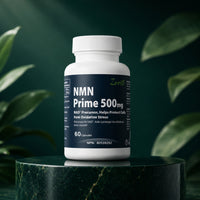
NMN, short for nicotinamide mononucleotide, is a direct precursor to NAD+. The body converts NMN into NAD+. That is why supplement makers and researchers got excited about it.
What human trials show so far:
A 2023 randomized controlled trial in Scientific Reports showed that long term NMN supplementation increased blood NAD metabolism in healthy adults. A randomized, double blind, placebo controlled trial in middle aged adults found that doses up to 900 mg per day were safe and well tolerated, with dose dependent increases in blood NAD concentrations. A 2024 systematic review with meta analysis of randomized controlled trials reported that oral NMN had effects on glucose and lipid markers in adults, although the size of the effect varied. Another systematic review of randomized trials found improvements in some physical performance measures with NMN.
What the evidence does not show yet:
Large, long term studies on lifespan in humans do not exist. Most trials are short, with small samples, and look at biomarkers rather than disease outcomes or death. So while NMN reliably raises NAD+ in the blood, we do not yet have proof that it makes people live longer.
Regulatory note: in late 2022 the U.S. FDA said NMN could not be sold as a dietary supplement because it had been studied as a drug. After legal pushback, the FDA reversed that position in 2025 and confirmed NMN can be marketed as a dietary supplement. If you are considering NMN or any NAD+ booster, talk to your doctor, especially if you have other health conditions.
Putting It All Together
Based on the strongest peer reviewed evidence, the practical longevity playbook looks like this:
- Eat a Mediterranean style diet most days.
- Move every day, hit at least 150 minutes of moderate activity per week, and lift weights twice a week.
- Sleep seven to eight hours on a regular schedule.
- If you smoke, quit. Any age helps.
- Limit alcohol and ultra processed food.
- Keep close social ties and stay connected.
- Manage stress and check your blood pressure, blood sugar, and cholesterol with your doctor.
- If you are interested in NMN or NAD+ boosters, treat them as experimental and talk to a clinician first.
The basics still beat the hype. Diet, movement, sleep, smoking status, and social connection have decades of strong evidence. NMN and NAD+ are promising and safe in early human trials, but they are an add on, not a substitute for the proven habits.
Frequently Asked Questions
Does NMN really increase NAD+ in humans?
Yes. Multiple randomized controlled trials show oral NMN increases blood NAD+ levels in a dose dependent way.
Is NMN safe?
Short term trials up to 900 mg per day report good tolerability and no serious adverse events in healthy adults. Long term safety data are still limited.
What is the best diet for longevity?
The Mediterranean diet has the strongest evidence in long running cohorts and meta analyses.
How much exercise do I need?
At least 150 minutes per week of moderate activity is the floor. More is better up to a point, with continued benefit at three to five times that level.
Is seven hours of sleep really the sweet spot?
Yes. Mortality risk is lowest around seven hours, with risk rising on both ends of the curve.
Sources
- López-Otín C, Blasco MA, Partridge L, Serrano M, Kroemer G. Hallmarks of aging: An expanding universe. Cell. 2023. Read on Cell
- Trichopoulou A, Costacou T, Bamia C, Trichopoulos D. Adherence to a Mediterranean Diet and Survival in a Greek Population. New England Journal of Medicine. 2003. Read on NEJM
- Mediterranean Diet in Older Adults: Cardiovascular Outcomes and Mortality from Observational and Interventional Studies, A Systematic Review and Meta Analysis. Nutrients. 2024. Read on PubMed
- Kraus WE et al. 2 years of calorie restriction and cardiometabolic risk (CALERIE): exploratory outcomes of a multicentre, phase 2, randomised controlled trial. The Lancet Diabetes and Endocrinology. 2019. Read on PubMed
- Waziry R et al. Effect of long term caloric restriction on DNA methylation measures of biological aging in healthy adults from the CALERIE trial. Nature Aging. 2023. Read on Nature Aging
- Arem H et al. Leisure Time Physical Activity and Mortality, A Detailed Pooled Analysis of the Dose Response Relationship. JAMA Internal Medicine. 2015. Read on JAMA
- Yin J et al. Relationship of Sleep Duration With All Cause Mortality and Cardiovascular Events, A Systematic Review and Dose Response Meta Analysis of Prospective Cohort Studies. Journal of the American Heart Association. 2017. Read on JAHA
- Thomson B et al. Smoking Cessation and Short and Longer Term Mortality. NEJM Evidence. 2024. Read on NEJM Evidence
- Pirie K et al. The 21st century hazards of smoking and benefits of stopping, a prospective study of one million women in the UK. The Lancet. 2013. Read on The Lancet
- Holt-Lunstad J, Smith TB, Layton JB. Social Relationships and Mortality Risk, A Meta Analytic Review. PLOS Medicine. 2010. Read on PLOS Medicine
- Holt-Lunstad J et al. Loneliness and Social Isolation as Risk Factors for Mortality, A Meta Analytic Review. Perspectives on Psychological Science. 2015. Read on PubMed
- Katayoshi T et al. Nicotinamide adenine dinucleotide metabolism and arterial stiffness after long term nicotinamide mononucleotide supplementation, a randomized, double blind, placebo controlled trial. Scientific Reports. 2023. Read on Nature
- Yi L et al. The efficacy and safety of beta nicotinamide mononucleotide supplementation in healthy middle aged adults, a randomized, multicenter, double blind, placebo controlled, parallel group, dose dependent clinical trial. GeroScience. 2023. Read on PubMed
- Efficacy of oral nicotinamide mononucleotide supplementation on glucose and lipid metabolism for adults, a systematic review with meta analysis on randomized controlled trials. Critical Reviews in Food Science and Nutrition. 2024. Read on Taylor and Francis
- Improved Physical Performance Parameters in Patients Taking Nicotinamide Mononucleotide, A Systematic Review of Randomized Control Trials. PMC. 2024. Read on PMC
- U.S. FDA Confirms NMN Lawful in Dietary Supplements. Regulatory Update. 2025. Read summary
This article is for general information only. It is not medical advice. Talk with a qualified clinician before changing your diet, exercise, or supplement routine.