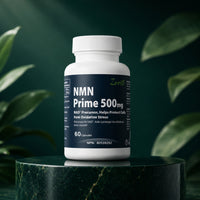

Most of us share the same goal: more energy. Not the shaky, overcaffeinated kind, but steady, lasting energy that supports workouts, long workdays, and still leaves something in the tank at night.
If you have explored longevity, anti-aging supplements, or cellular health, you have likely come across NMN (Nicotinamide Mononucleotide). It has become one of the most discussed supplements for boosting NAD+ levels and supporting healthy aging. Understanding the science is one thing, but making NMN part of a real daily routine is where many people get stuck.
When should you take NMN? Should it be taken with food? How do you remember it every day?
This guide breaks it down step by step so you can build a simple, effective NMN routine that fits your lifestyle and actually sticks.
What Is NMN and Why Does It Matter?
Before getting into the routine, it helps to understand why NMN matters.
Inside every cell is a molecule called NAD+. It plays a critical role in energy production, DNA repair, metabolism, and cellular resilience. As we age, NAD+ levels decline significantly. By midlife, many people have far less NAD+ than they did in their twenties. This decline is linked to fatigue, slower recovery, brain fog, and visible signs of aging.
NMN is a direct precursor to NAD+. When you supplement with NMN, your body converts it into NAD+, helping replenish what time gradually takes away.
The goal is not immortality. It is a health span, meaning better energy, sharp focus, and stronger recovery as you age.
Step 1: The Best Time to Take NMN
One of the most common questions is whether timing matters. For NMN, it does
Morning Is Ideal
Most research and user experience suggest taking NMN in the morning. NAD+ levels naturally rise during active hours and fall at night. Taking NMN earlier supports this natural rhythm.
Many people report improved mental clarity and physical energy when NMN is taken shortly after waking.
Avoid Late-Day Dosing
Because NMN supports cellular energy production, taking it late in the day may interfere with sleep. For most people, it is best to avoid NMN in the evening.
Best practice:
-
Take NMN first thing in the morning or with breakfast
-
Avoid taking it after early afternoon
Step 2: Choosing the Right NMN Form
NMN supplements come in several forms. The best option is the one you will use consistently.
Capsules or Tablets
Easy, portable, and pre-measured. Ideal if you already take supplements daily.
Pros: Convenience, accurate dosing
Cons: Slower digestion
NMN Powder (Sublingual)
Placed under the tongue to dissolve. This may allow faster absorption by bypassing digestion.
Pros: Potentially higher bioavailability
Cons: Sour taste, less convenient
Lozenges
Dissolve slowly in the mouth and offer a balance between convenience and absorption.
If your mornings are rushed, capsules are usually the easiest. If you enjoy a calm morning routine, sublingual powder or lozenges may be a good fit.
Step 3: Make NMN a Habit That Sticks
The key to consistency is habit stacking. This means attaching NMN to something you already do every morning.
Easy Habit Stacking Ideas
With coffee:
Place your NMN next to the coffee maker and take it while your coffee brews.
At the bathroom sink:
Keep NMN by your toothbrush and take it after brushing.
Before workouts:
Take NMN while filling your water bottle before heading out to exercise.
When NMN is part of an existing routine, remembering it becomes automatic.
Step 4: What to Take with NMN for Better Results
NMN works well on its own, but certain combinations may enhance its effects.
Resveratrol
Often called the red wine compound, resveratrol activates sirtuins, which rely on NAD+ to function properly.
Tip: Resveratrol is fat-soluble, so take it with food containing healthy fats.
TMG (Trimethylglycine)
NMN metabolism uses methyl groups. TMG helps replenish them and supports balance in the body.
Exercise
Physical activity naturally boosts NAD+ levels. Combining regular exercise with NMN supplementation supports metabolic health from multiple angles.
Step 5: NMN Dosage Guidelines
Starting slow is the best approach.
Common NMN doses in studies range from 250mg to 500mg daily, with some individuals using up to 1,000mg.
Suggested progression:
-
Weeks 1 to 2: 250mg daily
-
Weeks 3 to 4: Increase to 500mg if tolerated
-
Long term: 500mg is sufficient for many people
Higher doses are not always better. Long-term consistency matters more than short-term intensity.
Step 6: How to Tell If NMN Is Working
NMN does not act like caffeine. Its benefits build gradually at the cellular level.
After 30 to 60 days, many users notice improvements in:
-
Afternoon energy and reduced crashes
-
Faster workout recovery and less soreness
-
Mental clarity and focus
Tracking these changes mentally or in a simple journal can help you evaluate your results.
Step 7: Proper NMN Storage
NMN is sensitive to heat, light, and moisture.
Storage tips:
-
Keep NMN in a cool, dark place
-
Refrigeration helps preserve potency
-
Always seal containers tightly
If buying in bulk, store most of it in the fridge and keep only a small amount accessible.
Common NMN Mistakes to Avoid
-
Skipping days and taking large doses occasionally
-
Buying untested or suspiciously cheap products
-
Expecting NMN to replace sleep, nutrition, or exercise
Look for NMN supplements that provide third-party lab testing to ensure purity and quality.
Final Thoughts: Making NMN Part of Your Normal
Adding NMN to your daily routine should feel simple, not complicated. When taken in the morning, paired with healthy habits, and used consistently, NMN can support long-term energy, focus, and overall every aspect of longevity and cellular health.
After a few weeks, it becomes second nature. You wake up, take your supplement, and move on with your day, feeling more supported from the inside out.
Here is to steady energy, clearer thinking, and better aging, one small habit at a time.
Sources
https://www.ncbi.nlm.nih.gov/pmc/articles/PMC7238909/ https://www.nature.com/articles/s41514-021-00072-4 https://www.cell.com/cell-metabolism/fulltext/S1550-4131(21)00173-7 https://www.science.org/doi/10.1126/science.aaf2693 https://pubmed.ncbi.nlm.nih.gov/33608240/