
If you're over 50, you might be familiar with a specific kind of fatigue.
It’s not just the "I had a long day" tiredness. It’s a deeper, more persistent feeling of being run-down. It's the afternoon slump that feels more like a crash, the lack of "get-up-and-go" for hobbies you used to love, and the sense that your body’s battery just isn't holding a full charge anymore.
For decades, we’ve brushed this off as a simple, unavoidable part of "getting older." But what if it’s not?
What if this fatigue is a direct symptom of a predictable, and potentially reversible, process happening deep inside your cells?
New scientific research is pointing to a "cellular energy crisis" that begins in middle age. The culprit is the decline of a vital molecule called NAD+. This discovery has sparked a global wave of interest in a compound that may be able to help: NMN, or nicotinamide mononucleotide.
This guide will break down the science in simple, easy-to-understand terms. We’ll explore why you feel tired, what NMN is, and what the latest human research actually says about its potential to help restore your energy.
Part 1: Your Body's "Cellular Energy Crisis"
To understand why you might feel so tired, we need to zoom in—way in, past your organs and tissues, right down to your individual cells.
Inside almost every cell, you have thousands of tiny "power plants" called mitochondria. The entire job of your mitochondria is to take the food you eat and the air you breathe and turn them into the energy that powers your body. The name of this energy molecule is ATP (adenosine triphosphate).
This process, however, requires a critical "coenzyme" to work. That coenzyme is NAD+ (nicotinamide adenine dinucleotide).
Think of it this way:
-
Your Mitochondria are the power plants.
-
The Food you eat is the raw fuel, like coal or natural gas.
-
NAD+ is the spark that ignites the fuel to make electricity.
Without the NAD+ spark, the fuel is useless and the power plant can't produce energy.
Here is the central problem: As we age, our NAD+ levels plummet.
By the time you reach 50, your body may have only half the NAD+ levels it did in your 20s.
When NAD+ levels fall, your cellular power plants become incredibly inefficient. The "spark" is weak. They can't produce as much ATP energy from the food you eat. The result is not a lack of fuel, but a lack of energy production. This is felt by your entire body as fatigue, sluggishness, and slower recovery.
This decline in NAD+ is considered one of the primary "hallmarks of aging," and it’s directly linked to that deep, cellular exhaustion you may be feeling.
Part 2: What is NMN? The "Raw Material" for Cellular Energy
If low NAD+ is the problem, the logical solution is to get more of it. Unfortunately, you can't just take an NAD+ pill. The molecule is too large and unstable to be absorbed directly by your cells.
Instead, you need to give your body the "precursors," or raw materials, it uses to make its own NAD+.
This is where NMN (Nicotinamide Mononucleotide) comes in.
NMN is a molecule that your body naturally uses in the "assembly line" for creating NAD+. It is found in small amounts in foods like broccoli, cucumbers, and avocados.
When you take an NMN supplement, it is absorbed into your bloodstream and delivered to your cells. Inside the cell, it is rapidly and efficiently converted into NAD+.
-
The Analogy: If your cellular power plant (mitochondria) is struggling because it's run out of its ignition spark (NAD+), taking NMN is like a delivery truck arriving with a fresh supply of the exact raw materials needed to make more sparks.
More NMN gives your body what it needs to rebuild its supply of NAD+. A restored NAD+ supply allows your mitochondria to get back to their primary job: efficiently converting food into the ATP energy that powers your life.
Part 3: The Science: Can NMN Really Help with Fatigue Over 50?
This is the most important question. For years, most of the exciting research was in mice. But in the last few years, a wave of high-quality human clinical trials has been published. The results are no longer just theory; we now have practical data.
The evidence suggests NMN's benefits are directly related to energy, endurance, and physical function—especially in middle-aged and older adults.
1. The Evidence on Physical Endurance and Stamina
One of the most direct ways to measure "energy" is to test physical endurance. A landmark 2023 study published in the journal Geroscience did exactly this.
-
The Study: Researchers took 80 healthy middle-aged and older adults (ages 40-65) and gave them either a placebo or various doses of NMN (300, 600, or 900 mg) every day for 60 days.
-
The Test: Their primary test of energy and endurance was the "six-minute walk test"—a gold standard for measuring physical function.
-
The Results: The groups taking NMN saw a significant, dose-dependent increase in their walking distance. The group taking 600 mg per day saw the most impressive improvement, walking much farther in six minutes than they could at the start of the study.
-
What This Means: NMN didn't just make them "feel" better; it measurably improved their physical endurance and functional capacity. This is a direct translation of improved cellular energy into real-world stamina.
2. The Evidence on Fatigue and Sleep
A 2022 study in the journal Nutrients looked at NMN's effects specifically on fatigue and sleep in adults over 65.
-
The Study: Researchers gave older adults 250 mg of NMN or a placebo for 12 weeks.
-
The Finding: The group taking NMN saw significant improvements in lower-limb function and, most importantly, reported a significant reduction in drowsiness and fatigue. The study noted that taking NMN in the afternoon seemed to be most effective for reducing evening fatigue.
-
What This Means: This study directly links NMN supplementation to a reduction in the feeling of fatigue, which may also be related to improvements in sleep quality.
3. The Evidence on Cellular Energy (Aerobic Capacity)
Another key study from 2021, published in the Journal of the International Society of Sports Nutrition, examined how NMN improves energy.
-
The Study: This trial involved amateur runners, but its findings are relevant to everyone. The runners were given NMN plus exercise, or just exercise alone.
-
The Finding: The NMN group saw a much greater improvement in their aerobic capacity. This is the body's ability to use oxygen to power muscles during activity. The researchers concluded this was because NMN improved the oxygen utilization capacity within the skeletal muscle itself.
-
What This Means: This study provides a powerful "why." It shows NMN is working at the muscular level, helping the mitochondria use oxygen more efficiently to create energy. This is the very definition of restoring cellular energy.
A Note of Scientific Honesty: Energy vs. Strength
It is important to be clear about what the science says. The evidence strongly points to NMN improving energy, stamina, and endurance.
The evidence for NMN building new muscle mass or increasing raw strength (like a weightlifter) is much weaker. In fact, a major 2025 meta-analysis (a study of 12 other studies) concluded that, based on current evidence, NMN did not significantly improve muscle strength or mass in older adults.
This distinction is key: NMN appears to be a "fuel" that helps your existing muscles work better and longer, not a "building block" that makes them bigger. For people over 50, the primary complaint is usually fatigue (a lack of fuel), making NMN a very relevant potential solution.
Part 4: NMN vs. Caffeine: The Difference Between "Fuel" and "Fire"
"I'm tired. I'll just drink another coffee."
This is the standard approach to low energy, but it's fundamentally different from what NMN does.
-
Caffeine is a stimulant. It works by blocking the signals in your brain that tell you you're tired. It's like pressing the accelerator on your car. It "borrows" energy and can even strain your system, leading to a crash later. It doesn't create any new energy.
-
NMN is a fuel precursor. It works by being converted into NAD+, which your mitochondria then use to create new cellular energy (ATP). It's like refilling your car's gas tank.
Using caffeine to fight deep, cellular fatigue is like stepping on the gas when the tank is empty—you'll just sputter and stall. NMN is designed to address the root problem by refilling the tank, allowing your cellular engines to run smoothly and efficiently on their own.
Part 5: Is NMN Safe for People Over 50? (And What About Dosage?)
As a supplement that works at such a fundamental level, safety is a primary concern. Here, the human data is very reassuring.
-
Safety Profile: Across multiple human clinical trials, NMN has been shown to be safe and very well-tolerated, even at high doses. A 2024 systematic review of 10 different trials found no serious adverse effects.
-
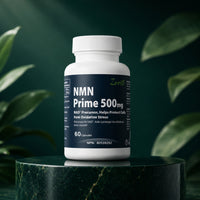
Common Dosages: The clinical data on NMN supplementation shows that benefits are achieved across a wide range, from 250 mg up to 1000 mg daily. For most adults, 500 mg is the recommended starting dose, providing a robust, clinically-informed level to boost NAD+ effectively.
-
Studies have shown success at lower doses (250 mg) for reducing fatigue and improving insulin sensitivity in older adults.
-
Research on physical performance demonstrating that those seeking maximum athletic or endurance benefits may choose to increase to 1000 mg safely.
-
As with any new supplement, it is essential to speak with your doctor before starting. This is especially true for those over 50, who may be taking other medications.
Part 6: Beyond the Pill: Your 3-Step Plan to Fight Fatigue
NMN is a powerful tool, but it is not a magic pill that can replace a healthy lifestyle. The best results come when you combine it with other science-backed strategies to boost your NAD+ and energy levels.
-
Move Your Body: Exercise is the most proven natural NAD+ booster on the planet. Both resistance training (lifting weights) and aerobic exercise (brisk walking, cycling) signal your body to create more mitochondria and more NAD+.
-
Eat Smart: You can't supplement your way out of a poor diet. Focus on whole foods, especially those rich in B-vitamins (which are also NAD+ precursors), such as salmon, chicken, leafy greens, and legumes.
-
Protect Your Sleep: Your body does most of its cellular repair and NAD+ replenishment while you sleep. Prioritizing 7-8 hours of quality sleep is non-negotiable for fighting fatigue.
Part 7: A Quick Guide for Canadians
If you decide to try NMN, you'll be faced with a confusing market. For Canadians, the purchasing process is much simpler and safer than in other countries.
-
Look for the NPN: Do not buy any supplement in Canada that does not have a Natural Product Number (NPN) on the label. This eight-digit number confirms that Health Canada has reviewed the product for safety, quality, and health claims.
-
Purity Matters: Look for brands that are "third-party tested." This means an independent lab has verified that the product contains what it claims to contain, without impurities.
Part 8: Further Reading & Journal Resources
For those who want to see science firsthand, here are the direct links to the key human studies mentioned in this article.
-
On Physical Endurance & Walking Distance (The Geroscience Study)
-
Title: The efficacy and safety of β-nicotinamide mononucleotide (NMN) supplementation in healthy middle-aged adults: a randomized... trial.
-
On Fatigue & Sleep in Older Adults (The Nutrients Study)
-
Title: Effect of 12-Week Intake of Nicotinamide Mononucleotide on Sleep Quality, Fatigue, and Physical Performance in Older Japanese Adults...
-
On Aerobic Capacity & Cellular Energy (The JISSN Study)
-
Title: Nicotinamide mononucleotide supplementation enhances aerobic capacity in amateur runners: a randomized, double-blind study.
-
On Physical Performance (Systematic Review)
-
Title: Improved Physical Performance Parameters in Patients Taking Nicotinamide Mononucleotide (NMN): A Systematic Review...
-
Link: https://www.ncbi.nlm.nih.gov/pmc/articles/PMC11365583/
-
A Balanced View on Muscle Strength (The 2025 Meta-Analysis)
-
Title: The Effect of Nicotinamide Mononucleotide and Riboside on Skeletal Muscle Mass and Function: A Systematic Review and Meta-Analysis.
-
Link: https://www.ncbi.nlm.nih.gov/pmc/articles/PMC12022230/
Conclusion: A New Way to Think About "Getting Older"
That deep, persistent fatigue you may be feeling over 50 is not just "in your head," and it may not be an inevitable part of aging. It's a real, biological signal of a "cellular energy crisis" caused by declining NAD+ levels.
NMN is emerging as one of the first scientifically-backed tools that can address this problem at its root. By providing your body with the raw materials to refuel its cellular power plants, it offers a new way to support your energy, stamina, and vitality.
It is not a fountain of youth, but it is a powerful new resource in the quest to add more life to your years.