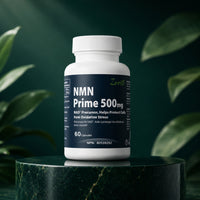

Nicotinamide mononucleotide (NMN) has quickly become one of the most searched supplements in the world of longevity and anti-aging. Marketed as a powerful way to boost energy, slow aging, and improve overall health, NMN is gaining attention from both scientists and everyday consumers.
But is NMN really effective, or is it just another overhyped supplement trend?
At Zeroo Health, we focus on clear, evidence-based insights. In this article, we break down what NMN is, how it works, what current research says, and whether it’s worth considering.
What Is NMN?
NMN stands for nicotinamide mononucleotide, a naturally occurring compound found in small amounts in foods like broccoli, avocado, and cabbage.
More importantly, NMN plays a key role inside the body. It is a direct precursor to NAD+ (nicotinamide adenine dinucleotide), a coenzyme essential for many biological processes.
NAD+ is involved in:
- Energy production at the cellular level
- DNA repair
- Metabolism regulation
- Cellular aging processes
As we age, NAD+ levels decline significantly. This drop is linked to reduced energy, slower metabolism, and increased vulnerability to age-related diseases.
NMN supplementation aims to restore NAD+ levels and support healthy aging.
Why NMN Is Trending in Anti-Aging and Longevity
The popularity of NMN is largely driven by one key idea:
If NAD+ declines with age, increasing it might slow down aging.
This concept has gained traction through laboratory research and early studies showing that boosting NAD+ can improve cellular function.
In animal studies, NMN has been associated with:
- Improved metabolism
- Better insulin sensitivity
- Enhanced mitochondrial function
- Increased physical activity
These results have led to strong interest in NMN supplements within the longevity and biohacking communities.
However, most of these findings come from animal models, not human trials.
How NMN Works in the Body
NMN is absorbed into cells and converted into NAD+. Once NAD+ levels increase, it supports several key biological pathways.
These include:
- Activation of sirtuins, proteins linked to aging and cellular repair
- Improved mitochondrial function for energy production
- Enhanced DNA repair mechanisms
- Better regulation of inflammation and oxidative stress
While this mechanism is scientifically sound, the key question remains whether these cellular effects lead to real health improvements in humans.
What Does the Research Say About NMN?
Evidence from Animal Studies
Animal research provides the strongest support for NMN’s potential.
Studies in mice show that NMN can:
- Increase NAD+ levels
- Improve glucose metabolism
- Enhance endurance and physical activity
- Support cardiovascular health
These results suggest NMN may influence aging-related processes at a cellular level.
However, results in animals do not always translate to humans.
Human Clinical Studies
Human research on NMN is still in early stages but growing.
Current findings show:
- NMN supplementation can increase NAD+ levels in humans
- It appears safe when used in short-term studies
- Some trials show improvements in insulin sensitivity
- Modest benefits in muscle function and endurance have been observed
Despite these positive signs, there are important limitations:
- Many studies have small sample sizes
- Most trials are short-term
- Results are not always consistent
- Long-term effects remain unknown
At Zeroo Health, we emphasize that current evidence is promising but not definitive.
Does NMN Actually Improve Health?
One of the biggest questions is whether increasing NAD+ leads to meaningful health outcomes.
So far, the evidence is mixed.
Some studies suggest:
- Improved metabolic markers
- Better physical performance in older adults
- Enhanced muscle function
However, there is no strong evidence that NMN can:
- Extend human lifespan
- Reverse aging
- Prevent major diseases
This gap between biological effects and real-world outcomes is a key reason NMN remains controversial.
Potential Benefits of NMN
Based on current scientific data, NMN may offer several potential benefits.
1. Increased NAD+ Levels
This is the most consistently proven effect. NMN effectively raises NAD+ levels in the body.
2. Metabolic Health Support
Some studies suggest improved insulin sensitivity, particularly in aging populations.
3. Physical Performance
NMN may contribute to better endurance, walking speed, and muscle strength.
4. Cellular Repair and Maintenance
Through NAD+ pathways, NMN supports cellular repair mechanisms and stress responses.
NMN and Anti-Aging: What Is Proven?
NMN is often promoted as an anti-aging supplement, but the scientific evidence does not fully support these claims.
Currently:
- There is no proof NMN extends human lifespan
- There is no proof it reverses aging
- Long-term human data is lacking
Most anti-aging claims are based on animal studies or theoretical mechanisms rather than clinical proof.
Zeroo Health recommends approaching these claims with caution.
Is NMN Safe?
Short-term studies suggest NMN is generally safe and well tolerated.
Reported findings include:
- No serious adverse effects in clinical trials
- Good tolerance at standard doses
Some individuals may experience mild side effects such as:
- Digestive discomfort
- Headache
- Nausea
However, important safety considerations remain:
- Long-term safety has not been established
- Effects on cancer risk are still unclear
- Supplement quality can vary due to limited regulation
The Problem With NMN Marketing
The NMN market has grown rapidly, but not all claims are backed by science.
Key concerns include:
Overstated Benefits
Many brands promote NMN as a proven anti-aging solution, which is not supported by current human evidence.
Lack of Regulation
Dietary supplements are not strictly regulated, leading to variations in quality and purity.
Limited Long-Term Data
There is still no clear understanding of long-term NMN use.
Misinterpretation of NAD+ Science
Increasing NAD+ does not automatically result in better health or longer lifespan.
At Zeroo Health, we prioritize transparency and evidence over marketing hype.
Who Should Consider NMN?
NMN may be of interest to:
- Older adults experiencing age-related decline
- Individuals focused on metabolic health
- People interested in longevity research
However, it should not replace foundational health habits such as:
- Balanced nutrition
- Regular physical activity
- Quality sleep
- Medical care when needed
These lifestyle factors remain the most effective ways to support long-term health.
Final Verdict: Does NMN Really Work?
NMN is not a scam, but it is also not a proven anti-aging breakthrough.
Here is a clear summary:
- NMN increases NAD+ levels
- It shows promising biological effects
- It appears safe in short-term use
- Evidence for major health benefits in humans is still limited
- Anti-aging claims are not yet supported by strong clinical data
Zeroo Health Perspective
At Zeroo Health, our approach is simple. We follow the science and avoid exaggerated claims.
NMN is a promising compound with real biological effects, but it is still in the early stages of research. More large-scale and long-term human studies are needed before strong conclusions can be made.
Until then, NMN should be viewed as a developing area of health science, not a guaranteed solution.
Conclusion
NMN sits between scientific promise and marketing hype.
It represents an exciting direction in aging research, but current evidence does not support the bold claims often seen online.
If you are considering NMN, focus on informed decisions, realistic expectations, and proven health strategies first.
The future of NMN may be significant, but for now, it remains a supplement with potential, not certainty.
Sources
https://www.sciencedirect.com/science/article/pii/S2161831323013595
https://www.nature.com/articles/d42473-022-00002-7
https://www.mdpi.com/3042-5158/1/2/9
https://clinicaltrials.gov/study/NCT06889740
https://nmnreviewhub.com/nmn-research-clinical-studies/